Showing posts with label copyright. Show all posts

Saturday, September 5, 2009

Lawrence Lessig on the Remix Culture


Lawrence Lessig is a renowned author and proponent of "copyleft" who has a number of interesting thoughts in the field of copyright law. I highly recommend that you read some of his works, especially as many of his full books are available free online under a creative commons license.

Below is an interview on the popular Comedy Central show, "The Colbert Report", where he discusses his latest book, "Remix".

The Colbert ReportMon - Thurs 11:30pm / 10:30c
Lawrence Lessig
http://www.colbertnation.com/
Colbert Report Full EpisodesPolitical HumorHealth Care Protests

Sunday, August 23, 2009

Google Books


In 2007, while I was a student in University College Cork, I authored a paper entitled "Don't Be Evil - The Google 'Book Search' Project". The paper dealt with an examination of Google's "Book Search" Project and whether it would pass a "fair use" copyright test. I was pretty proud of my work, and it was even shortlisted for the prestigious Matheson Ormsby Prentice Undergraduate Prize in Information Technology Law. As a result, I have tried to keep an eye on the Project and so, even though it may not fit in with the overall theme of this blog, I will from time to time include any updates here.

The first of these updates is the news that Google has struck a deal to scan and digitize in copyright, but out of print works, including "orpan" works, i.e. works where it is almost impossible to identify the copyright holder(1).

The second update is that the US Government is close to scuppering the deal with their concern about the possibility of a Google monopoly over "orphan" works.

The third update is that the French National Library is allowing Google access to its archive, after the library's calls for a European Union online book repository were ignored.

The fourth update is that Google's rivals (Microsoft, Yahoo and Amazon) are also trying to defeat the deal with a view to preventing Google becoming a "book gatekeeper". [Can anyone smell irony?!]

Commentators are divided on the issue, saying on the one hand that if Google has the resources and the capability to save "orphan" works then it should even if the motivation is profit. On the other hand, a monopoly of orphaned works might lead to more difficulties.

As I stated in the conclusion to my paper, "After all, as George Orwell wrote: “Who controls the past controls the future”, and Google could be said to be going a long way towards this end... Similarly it could be seen as creating the need for more responsibility from corporations such as Google, who are now effectively acting as the stewards of information for the public. But these worries might well be unfounded seeing as Google believes, at least informally, in the phrase: “Don’t be evil”.

A copy of my paper can be found HERE.

Footnote

(1) "Orphan" Works, Wikipedia Entry, en.wikipedia.org/wiki/Orphan_works

Source

Can Microsoft, Yahoo and Amazon help scuttle Google's book settlement?
(LINK)
Lawyer files a full-throated attack on Google Books deal
(LINK)
Google annexes Bibliothèque Nationale de France
(LINK)
Just let Google give us the books already!
(LINK)
Justice inquiries into Google Book Deal show it's all but dead
(LINK)

Tuesday, August 18, 2009

Digital Music is on the Rise - Will the same hold true for Digital TV?


Recent reports show a healthy growth in market share for online sales of music. The television industry and other copyright holders should pay attention to this fact when deciding on new business models for the distribution of their video content. The times they are a-changin', best keep that in mind.

Source

iTunes swallowed a quarter of US music sales
(LINK)
Good riddance: Digital music sales to surpass CDs in 2010?
(LINK)

Saturday, August 15, 2009

The Pirate Party has Begun and Everyone's Invited!


In a previous post (LINK) I mentioned that the Swedish Pirate Party had recently won a seat in the European Parliament. Well apparently that was the tip of a very large pro-piracy iceberg as there is a large and well supported international community of Pirates out there. According to Wikipedia, the Pirate Party is organised in around 33 countries, and the most recent news is that the UK chapter of the organisation is gaining members at a very fast pace.

So a political movement has begun that is sure to alter the way that copyright laws develop in the future. I'm sure that revolutionaries throughout the world are very proud. I know I am.

Source

100 freetards an hour join Pirate Party UK
(LINK)
Wikipedia Entry - Pirate Party
(LINK)

UPDATE - 25 August 2009

Be warned. The Pirate Party UK is going after the youth vote. The question is will that be good enough. Perhaps piracy will prove to be an exciting enough concept to lure usually apathetic youngsters out from behind their computers and into a polling booth. Or maybe they will just be allowed to vote from their PC.

Source

Pro-filesharing political group targets youth vote at next election
(LINK)

Friday, July 31, 2009

Some Relevant Academic Writings - July 2009


1. "Clash of the Titans: Does Internet Use Reduce Television Viewing?"

by Stan J. Liebowitz and Alejandro Zentner
July 29, 2009
(LINK)
2. "Invoking and Avoiding the First Amendment: How Internet Service Providers Leverage Their Status as Both Content Creators and Neutral Conduits"
by Rob Friedan
June 1, 2009
(LINK)
3. "Uneasy Lies the Head that Wears the Crown: Why Content’s Kingdom is Slipping Away"
by Jonathan Handel
Vanderbilt Journal of Entertainment and Technology Law, Vol. 11, No. 3, pp. 597-636, 2009
(LINK)
4. "The Death of TV (As We Know It"
by D. Yvette Wohn
Jan 12, 2009
(LINK)
5. "Converting Pirates Without Cannibalizing Purchasers: The Impact of Digital Distribution on Physical Sales and Internet Piracy"
by Danaher, Brett, Dhanasobhon, Samita, Smith, Michael D. and Telang, Rahul
April 14, 2009
(LINK)
6. "Solutions to P2P Copyright Crisis in Hong Kong"
by Lin Xie
March 12, 2009
(LINK)

Saturday, July 25, 2009

Green Dam


If you dam a river it stagnates. Running water is beautiful water. So be a channel.
(English Proverb)


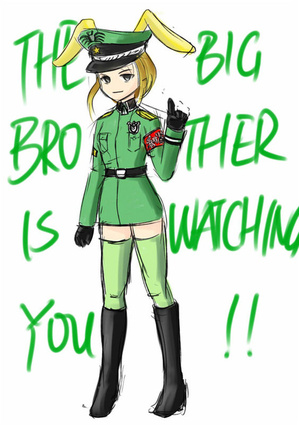
Green Dam Youth Escort is software implemented by the Chinese Government to effectively censor the internet, especially aimed at curbing online pornography and violence. The software is to be included on all new computers sold in mainland China. Aside from the obvious issues about internet censorship, it is interesting to note that the potential scope of such software could be widened to cover the protection of copyright materials. As such, content producers may wish to pay close attention to the success/failure of Green Dam.

To learn more, follow the links below:

China's Green Dam and the cyberwar implications
(LINK)
China's porn obsession not just a coverup for political repression
(LINK)
Who is attacking Solid Oak, whose code was stolen for Green Dam?
(LINK)
US calls for China to revoke censorware plan
(LINK)
China throttles Google, U.S. ratchets up trade war over Green Dam
(LINK)
On eve of Tianamen anniversary, China blocks Twitter, Flickr, Bing
(LINK)
China demands new PCs carry spyware
(LINK)
China defends 'healthy development' of spyware
(LINK)
Green Dam definitively blocks political sites - and creates security breach
(LINK)
US developer: China's Green Dam steals our code
(LINK)
Green Dam built on copyright, open source violations
(LINK)
Anonymous netizens offer a July 1 manifesto, posters
(LINK)
US Embassy joins in the Green Dam fray
(LINK)
China's not backing down but Green Dam Girl fights back
(LINK)

Sunday, April 12, 2009

Some Relevant Academic Writings - April 2009


1. "Contracts, Orphan Works, and Copyright Norms: What Role for Berne and

TRIPs?"
by Jane C Ginsburg
Columbia Public Law Research Paper No 09-200
(LINK)
2. "Intellectual Property Concerns for Television Syndication Over the Internet"
by Kenneth R. Carter
TV Over the Internet: Implications for Infrastructure, Content, Policy and Strategy, 2003
(LINK)

Wednesday, March 11, 2009

Geo-Blocking, Defeating the Internet One Jurisdiction at a Time?


Geo-Blocking is the practice of restricting online content to computers located within specific physical locations, and it is on the rise.

The websites of Hulu and NBC engage in Geo-Blocking of popular television shows, preventing European users from accessing their full streaming content. Similarly, Youtube has very recently blocked access to music videos to users in the United Kingdom(1).

Copyright holders argue that controlling online streaming of recently aired shows etc. is necessary to allow for worldwide syndication. However, copyright holders need to realise the advantages of extending their online streaming services to the rest of the world. Such as increased online advertising revenue and extra publicity care of internet "word of mouth". That and the fact that they would be embracing the internet and its benefits rather than continuing to try and limit and control it.

Of course the internet has responded to Geo-Blocking in the usual manner...by circumventing the restrictions(2). Perhaps a change of tactics is needed by copyright holders.

Footnotes

(1) http://out-law.com/page-9854
(2) http://www.thestar.com/Unassigned/article/583846

Sunday, March 1, 2009

Some Relevant Academic Writings - March 2009


1. "Problematic and Unnecessary? Issues with the Use of the Theft Offence to Protect Intangible Property"
Alex Steel, Sydney Law Review, Vol. 30, p. 575, 2008
(LINK)
2. "The Silver Lining in Dailymotion's Copyright Cloud"

Nicolas Jondet, U. of Edinburgh School of Law Research Paper No. 1 (April, 2008)
(LINK)
3. "Lost on the Web: Does Web Distribution Stimulate or Depress Television Viewing?"
Joel Waldfogel, NBER Working Paper No. W13497 (October, 2007)
(LINK)
4. "Three Scenarios for TV in 2015"
Laurence Meyer, Communications & Strategies (2006)
(LINK)

Wednesday, January 28, 2009

"Internet Television: A Copyright Analysis of Online Streaming Media"

As part of my L.L.M. (e-Law) degree from University College Cork, Ireland I wrote a thesis entitled, "Internet Television: A Copyright Analysis of Online Streaming Media". The thesis asked the question, what are the copyright implications of watching television online?

For more information about this thesis, including a copy of the final draft, please visit HERE.

Below you will find a presentation with a summary of this thesis.